
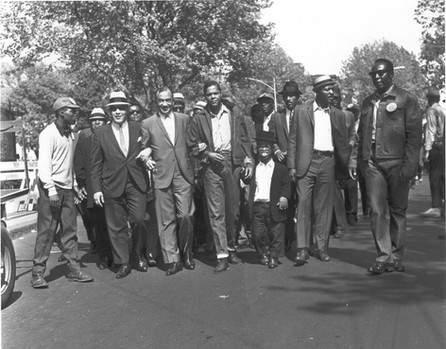
Before I became a writer, I lived behind a ten foot wall– inside one of the most dramatic untold stories in America. It’s time to tell it.
There is a ten-foot stone wall that runs around 43 acres of North Philadelphia. It was built in the 1800s, and for most of the twentieth century, it did exactly what walls are designed to do: keep some people in, and everyone else out. Martin Luther King Jr. stood at that wall in the summer of 1965 and called it “a kind of Berlin Wall to keep God’s colored children out.” He told the crowd of two thousand people gathered on Girard Avenue that those walls would tumble like the walls of Jericho. He was right. But it took three more years, a federal court ruling, and the most ferocious sustained protest campaign the northern civil rights movement had ever seen before the first Black students walked through the gates. I arrived sixteen years later. And I stayed for a decade.
That place is called Girard College. And it is one of the greatest untold stories in American television.
A School Built on a Dead Man’s Terms
Stephen Girard was a French immigrant who arrived in Philadelphia in the summer of 1776 — the same summer the Founders were down the street drafting the Declaration of Independence. By the time he died in 1831, he had become the wealthiest man in America. He left most of it — $6 million, the largest single philanthropic gift in American history at the time — to build a boarding school. The terms of his will were specific: the school was for “poor, white, male orphans.” Not poor children broadly. Not fatherless children. White ones.
For over a century, that will was the law of the land on a 43-acre campus in the middle of a neighborhood that was becoming increasingly Black. The irony was architectural: one of the most magnificent Greek Revival campuses in the country, designed by the same architect who would later create the dome of the United States Capitol, sat behind its stone wall while the community around it was locked out by a dead man’s words.
“The walls of Girard College will tumble like the walls of Jericho.” — Dr. Martin Luther King Jr., August 3, 1965
Cecil B. Moore and the Longest March
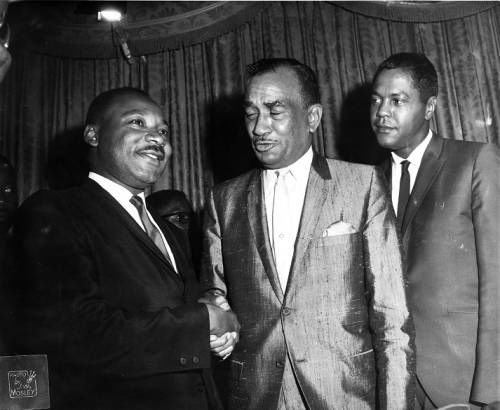
The fight to change that began in the courts in the 1950s. But courts move slowly, and Cecil B. Moore — lawyer, Philadelphia NAACP president, former Marine, and one of the most combustible figures in civil rights history — didn’t have patience for slow. On May 1, 1965, he organized a picketing campaign outside the walls of Girard College that lasted seven months and seventeen days. It was the longest sustained civil rights protest in United States history at that time. Hundreds of marchers — many of them teenagers, members of a group called “Cecil’s Army” — circled that wall around the clock, singing, chanting, facing police on horseback and dogs. Martin Luther King came and addressed the crowd. Roy Wilkins came. The world was watching North Philadelphia.
In 1968, a federal court finally ordered the school to desegregate. The first Black students enrolled that September. In 1984, the school admitted girls for the first time. That same year, I arrived.
· · ·
Ten Years Behind the Wall
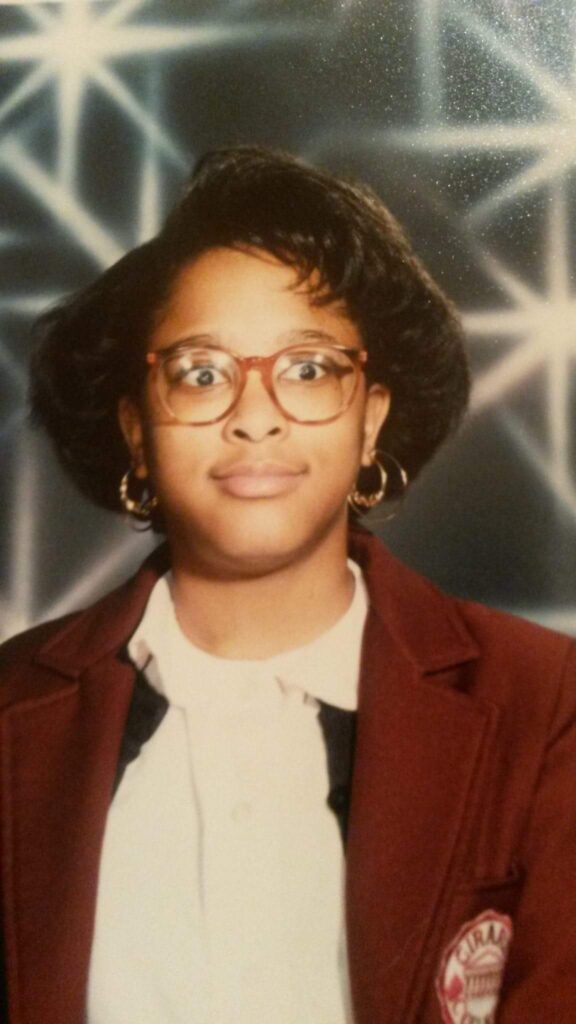
I lived at Girard College from 1984 to 1994. I didn’t visit on weekends — I lived there, weekdays and many nights, in a dormitory, with houseparents, in a world that existed almost entirely within those stone walls. The campus was breathtaking and strange: columns, marble floors, manicured grounds, and the constant low hum of institutional life. It had its own rhythms, its own language, its own social codes. And it had “Dorm Disorder” — what the staff called it when you were out of bed, loud, disruptive after lights out. Which, when you’re a kid growing up inside a boarding school, was most nights.
The school also had a summer camp — Pleasure School — where students spent weeks in a residential camp setting, away from the main campus. If Girard College was the intense, formal world of the school year, Pleasure School was where the masks came off. It was where relationships were forged, rivalries formed, and where kids who had been shaped by loss and circumstance figured out who they were going to be.
I am a television and film writer. I have spent my career looking for stories with scope, with history, with humanity. I have been looking at them my whole life without realizing it. This is that realization.
Two Stories. One World. Years of Television.
What I am developing is not just a movie or a show. It is a world — one with enough history, character, and moral complexity to sustain stories for years. Think of what Degrassi did with a single Canadian high school. Imagine what a school with this history can hold.
Feature Film · In Development
The Wall — A Past/Present Narrative
A feature that weaves between the 1965 integration marches outside the wall and the present-day lives of the people shaped by what happened there. Two timelines. One institution. The personal cost of a historical victory — and what it meant for the generations of children who came after. A short film is available.
Series · Long-Form Television
Pleasure School — The Camp Years
The summer camp chapter of Girard College life, told as a coming-of-age series about kids from broken circumstances trying to build whole selves. Funny, heartbreaking, alive. A world with room to grow for multiple seasons — the drama, the bonds, the mischief of young people who have only each other.
These aren’t just nostalgia projects. The history of Girard College is a prism for understanding race, class, philanthropy, institutional power, and the complicated American promise of opportunity. The personal stories — the Dorm Disorder, the friendships, the identities forged inside those walls — are universal. Every child who ever felt like an outsider will recognize these characters.
Community · Podcast
Dorm Disorder — with Dan Knittel
I’m not the only Girard alum who knows this world is worth exploring. My classmate Dan Knittel is already doing the work — his podcast Dorm Disorder (the name says everything) digs into the stories, the characters, and the culture of Girard life. The community is there. The audience is real. Listen on YouTube →
I am a writer and producer who has spent a career in this industry. I attended Girard College from 1984 to 1994 — I am the primary source, the institutional memory, and the creative voice for these stories. I am not pitching something I researched. I am pitching something I lived.
The wall eventually came down. The story never stopped.
Also available to read on my substack!
Leave a Reply